

Practice Pointer graphic

Know Your Risk. Start the Conversation.

What Is the Prostate?

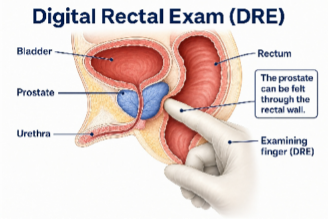
The prostate is a small gland about the size of a walnut. It sits below the bladder and surrounds part of the urethra, the tube that carries urine out of the body. The prostate makes fluid that becomes part of semen and helps push semen through the urethra during ejaculation.

What Is Prostate Cancer?

Prostate cancer begins when the prostate cells become abnormal and grow out of control. Researchers do not know for sure what causes these changes. The abnormal cells can build up and form a lump called a tumor. Many prostate cancers grow slowly and may not cause symptoms early, while others can grow more quickly or spread. It is one of the most common cancers among men in the United States.

Who Is at Higher Risk?

All men are at risk for prostate cancer. Age is the most common risk factor—the older a man is, the greater his chance of developing prostate cancer.

  • A father, brother, or son with prostate cancer
  • A strong family history of prostate, breast, ovarian, or pancreatic cancer
  • African ancestry, including African American or Caribbean ancestry
  • Inherited gene changes: Some gene changes passed from parent to child can increase prostate cancer risk.

Symptoms to Discuss with Your Healthcare Provider

Most men with early prostate cancer do not have symptoms. Talk with your healthcare provider if you notice:

  • Changes in urination, such as difficulty starting, a weak flow, or urinating more often
  • Pain or burning during urination or painful ejaculation
  • Blood in the urine or semen
  • Pain in the lower back, hips, or pelvis that does not go away

These symptoms can also be caused by conditions other than cancer.

Screening and Tests

Screening is a personal decision based on your age, family history, overall health, risk factors, and preferences. Talk with your healthcare provider about when to start and how often to follow up.

Common Screening Tools

  • PSA blood test: Measures the level of prostate-specific antigen in the A higher PSA level does not always mean cancer; other prostate conditions can also raise it. Your provider may recommend additional testing.

Digital rectal exam (DRE): A brief exam to check the prostate for changes in size, shape, or texture.an illustration of a digital rectal exam
When More Evaluation Is Needed

If screening results need follow-up, your provider may repeat the PSA test or recommend additional tests, such as an MRI or prostate biopsy.

The Good News

Many prostate cancers can be treated successfully, especially when they are found before they spread.

If Prostate Cancer Is Found

Treatment depends on the cancer’s stage, how quickly it is growing, your overall health, and your preferences. Options may include:
  • Active surveillance: Closely monitoring cancer with regular tests and treating it if it changes or grows.
  • Watchful waiting: Less intensive monitoring, with treatment focused on symptoms if they develop.
  • Surgery: Removing the prostate and nearby tissue when appropriate.
  • Radiation therapy: Using high-energy radiation to destroy cancer cells.
  • Chemotherapy: Uses medicines to destroy cancer cells or slow their growth.
  • Other therapies: Hormone therapy, targeted therapy, immunotherapy or specialized treatments such as high-intensity focused ultrasound (HIFU) may be options for some men.
Your healthcare team will explain the benefits and possible risks of each option and help you choose the treatment plan that is right for you.

Questions to Ask Your Healthcare Provider

Use these questions to start a conversation:

  • Am I at increased risk for prostate cancer?
  • When should I begin discussing prostate cancer screening?
  • What are the benefits and possible harms of PSA screening?
  • If my PSA result is abnormal, what are the next steps?
  • How often should I follow up based on my risk?

Healthy Habits

Healthy habits cannot prevent cancer, but they support overall health.

  • Stay physically active
  • Maintain a healthy weight
  • Eat fruits, vegetables, whole grains, and lean proteins
  • Avoid tobacco and limit alcohol
  • Keep regular preventive care visits

What Can You Do?

Know your risk, discuss symptoms, share your family health history, and ask your healthcare provider whether screening is right for you.